Precious cultural properties where history comes alive
Gesshoji Temple carefully preserves items associated with the lords of the Matsue domain, as well as works of art created by master craftsmen of the Edo period. By experiencing these cultural artifacts, one can feel the faith, aesthetic sensibilities, and spirit of the people of that time
Shimane Prefecture Designated Cultural Property
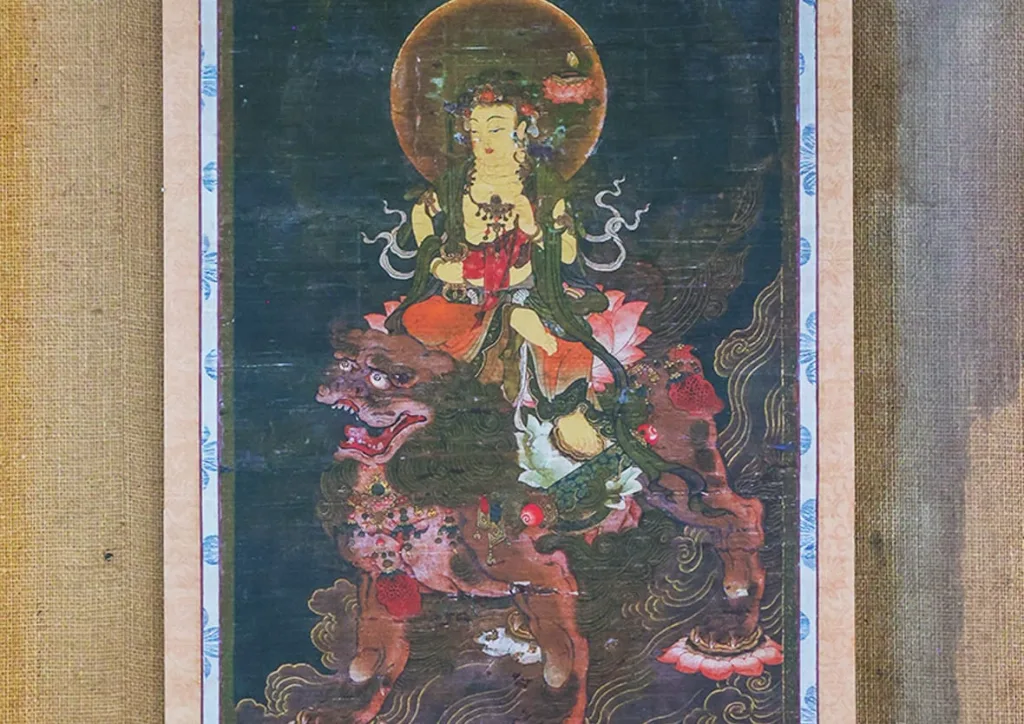
Color Painting on Silk: Manjushri on a Lion
This is a silk scroll painting depicting Manjushri Bodhisattva accompanied by a lion. Manjushri Bodhisattva is widely worshipped as a Buddha symbolizing wisdom, and his image riding a fierce lion represents the power of wisdom to overcome all obstacles. This work, which stands out for its delicate brushwork and beautiful colors, conveys the exceptional skill of the painter of that time.
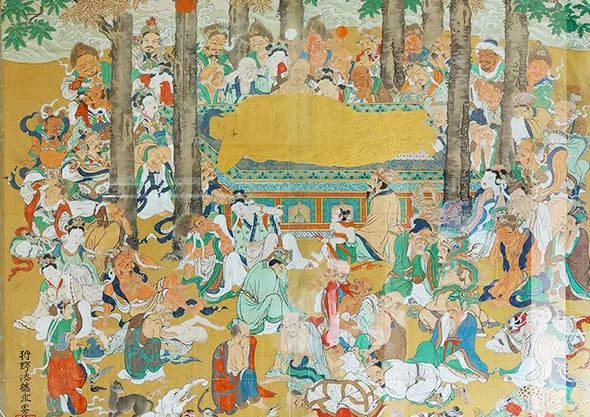
Nehan-zu (Parinirvana Painting)
This Buddhist painting depicts the scene of Buddha's death. Disciples, followers, and animals gather around Buddha, offering deep sorrow and respect.
This painting excels in compositional balance and the beauty of its colors, exuding a majestic atmosphere throughout the entire image. From the expressions of the figures and animals depicted to the intricate details of their clothing, this is a precious scroll that reflects the high level of skill of the artist of the time and their deep faith in Buddhism.
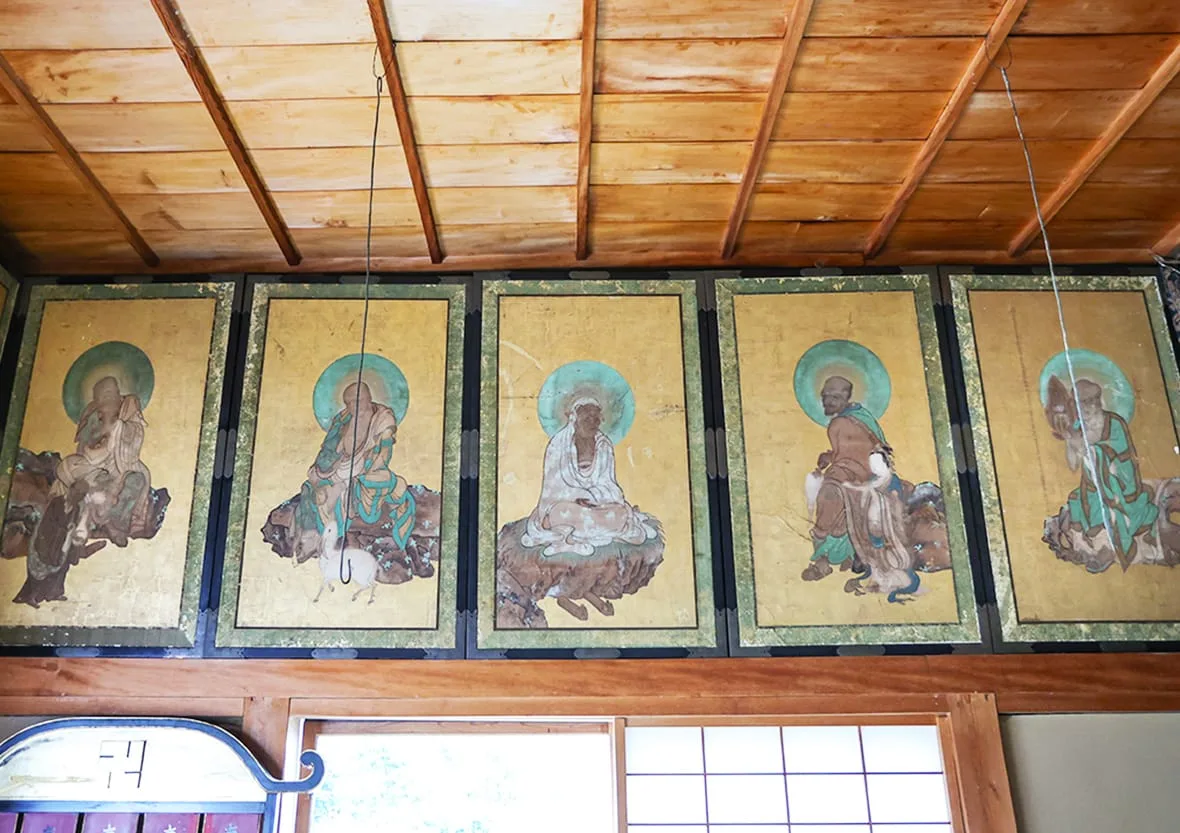
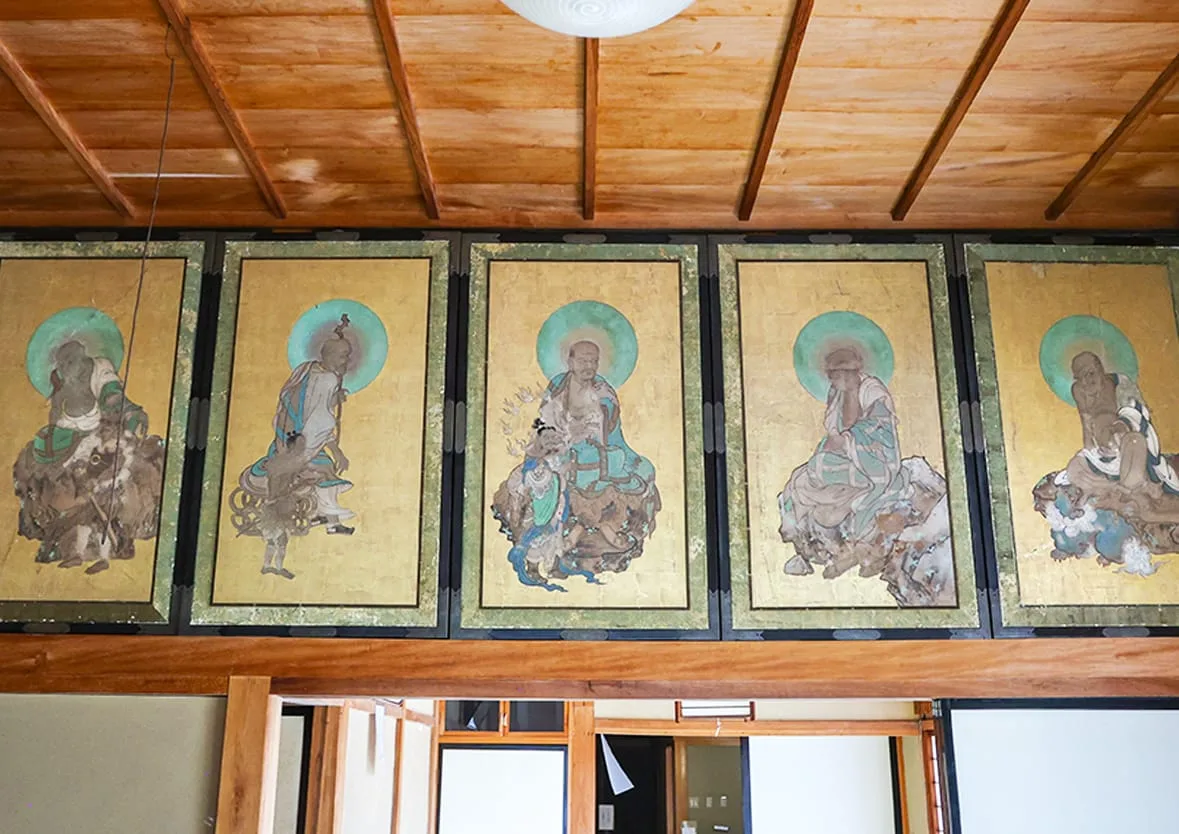
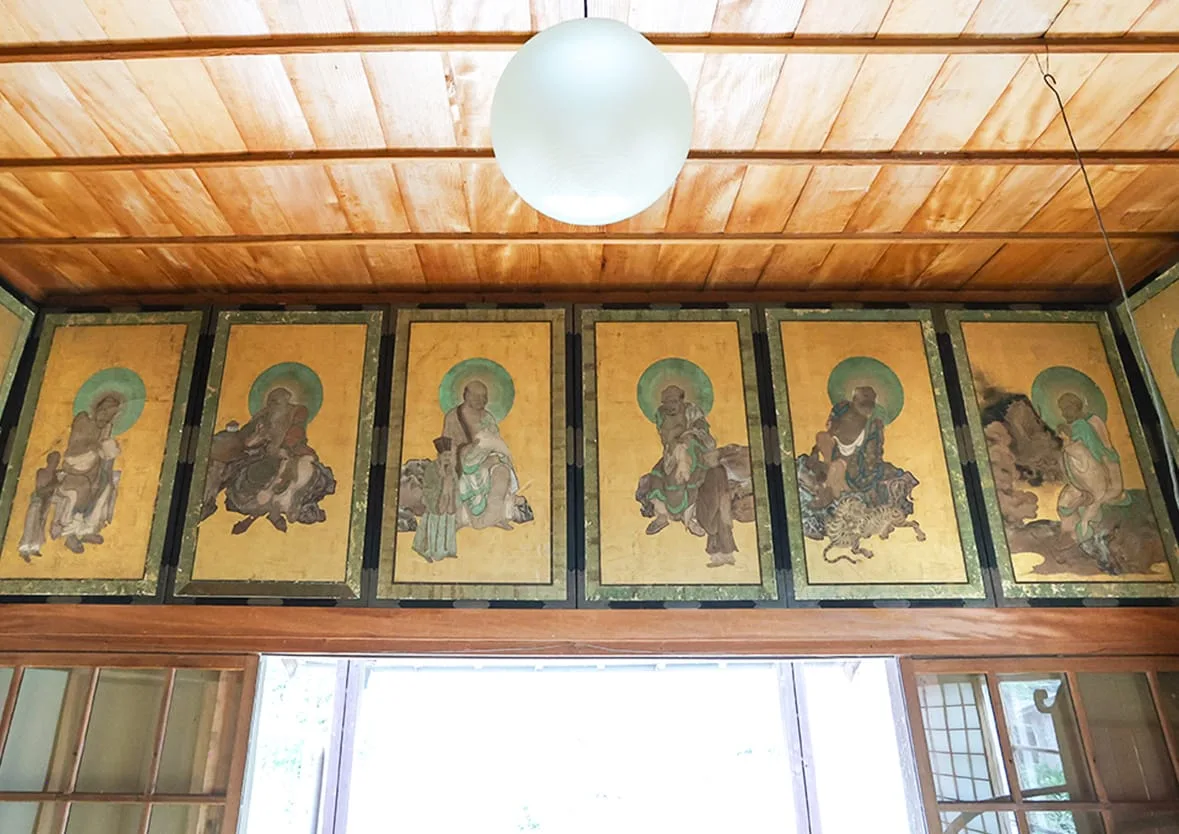
Sixteen Arhats by Kano Suiun
This is a painting of the Sixteen Arhats by Kano Eiun, the official lacquer painter of the Matsue Domain. The Sixteen Arhats are disciples of Buddha who were tasked with passing on the teachings of Shakyamuni to future generations, and each is depicted with a different expression and pose. In this painting, one Arhat is placed on each panel, and the set consists of sixteen framed panels. A distinctive feature is that the background is uniformly gold, and only the Arhats, their retinues, and the rocks on which they sit are depicted. This technique can also be seen in the works of Kano Yasunobu, Kano Eiun's teacher, and it is thought that he was influenced by the Arhats paintings of Kim Daesu, a painter of the Southern Vermilion style at the time.
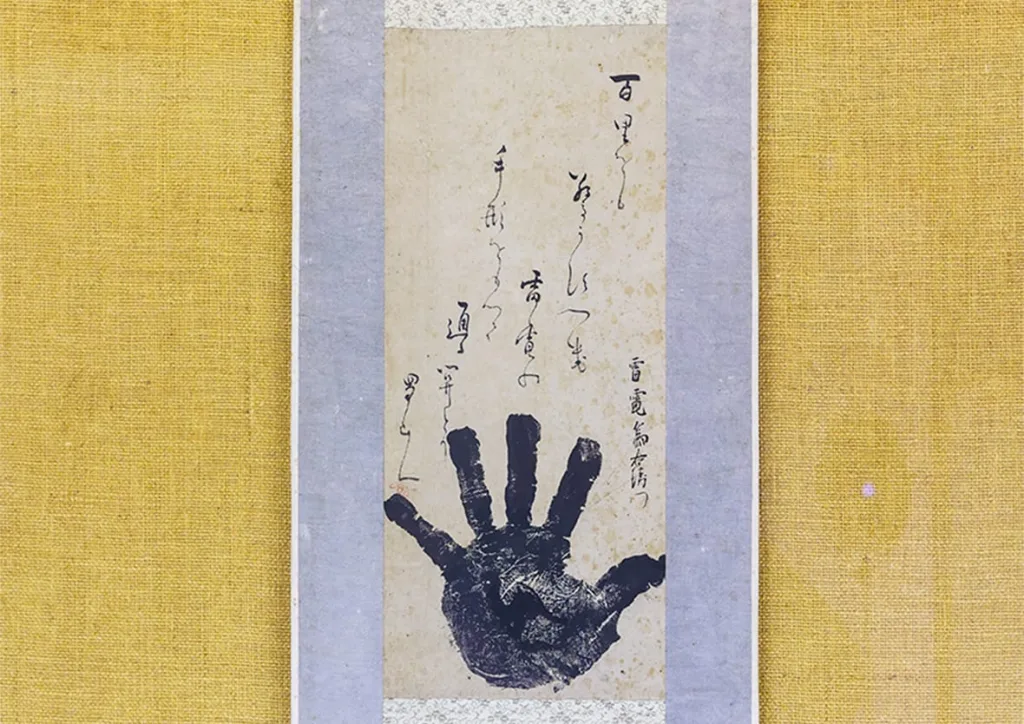
Handprint of Raiden Tameemon
This is a hanging scroll bearing the handprint of Raiden Tameemon, a legendary sumo wrestler who was active during the Edo period. Known as a sumo wrestler employed by the Matsue Domain, his overwhelming strength, stemming from his impressive physique of 197cm in height and 174kg in weight, earned him the title of "the strongest sumo wrestler in history." This handprint conveys his size and power to the present day, making it a valuable historical document that allows one to feel Raiden's presence firsthand.
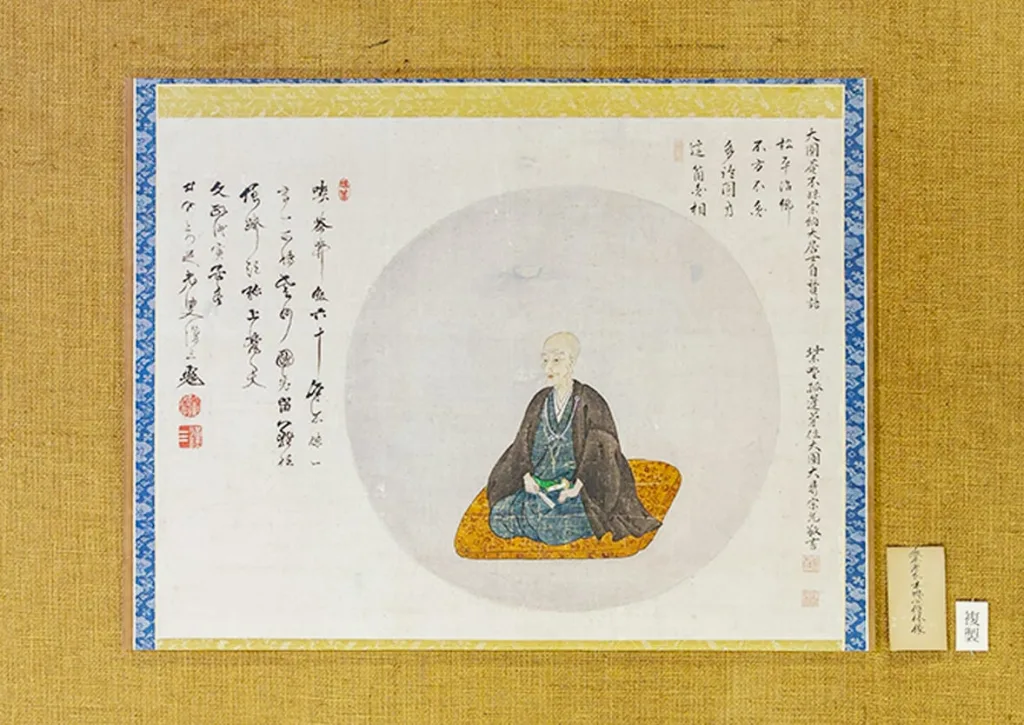
Portrait of Lord Fumai (Matsudaira Haruhide)
is a portrait of Matsudaira Harusato (Fumai-ko), the seventh lord of the Matsue Domain. Fumai-ko, also renowned as a tea master, made significant contributions to the development of tea ceremony culture, and his influence remains today in the form of the "Fumai-ryu" school of tea ceremony. This portrait is a valuable work that conveys not only Fumai-ko's dignified appearance but also the spirit of the tea ceremony that he cherished.