
About the Great Turtle Statue
Top / About Gesshoji Temple / About the Giant Turtle Statue
Standing quietly within the grounds of Gesshoji Temple
is a large stone statue of a giant turtle.
Believed to grant wishes for longevity,
many people have entrusted their prayers to it.
In recent years,
it has also attracted attention
as a place associated with Lafcadio Hearn and his wife, Setsu, who
This giant turtle statue, cherished for generations
continues to watch over many people
as a symbol of Gesshoji Temple
What is the Great Turtle Statue?
Lord Harusato (Fumai), the seventh lord of the Matsue Domain and a member
erected the "Juzōhi (memorial tower for those who died before death)"
the request of his father, Lord Muneaki,
to praise his virtues and pray for his long life
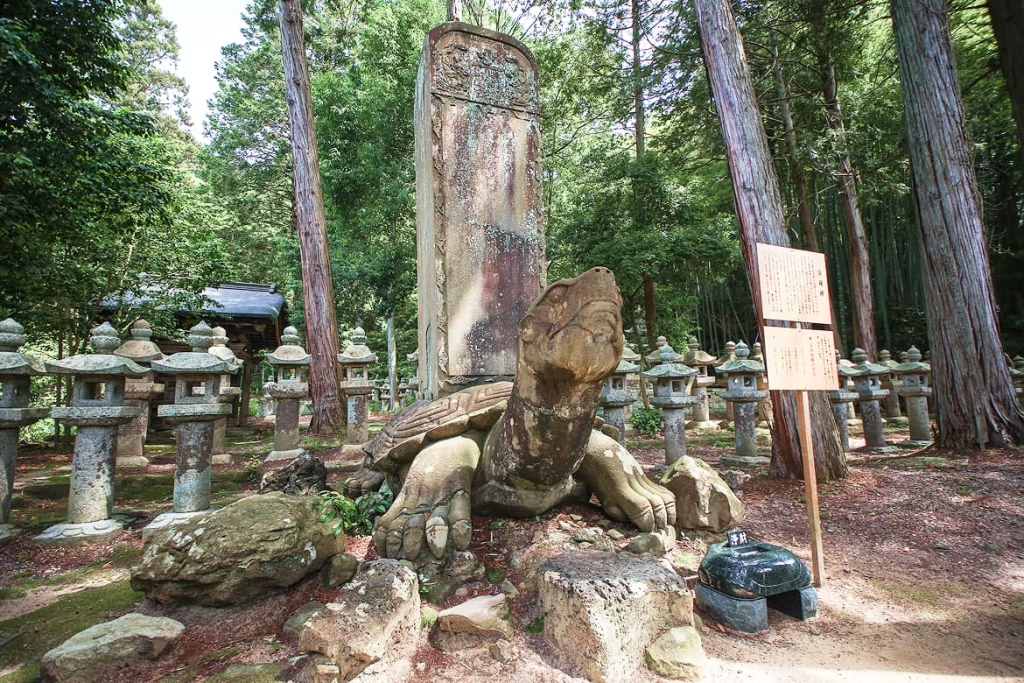
The stone was quarried in 1781 in the mountains of Kutami-cho, Izumo City, about 20 kilometers from Matsue, and is said to have been transported across Lake Shinji by boat and raft.
The monument was completed the following year, but it is uncertain whether it was erected before the day of Lord Muneyoshi's death.
The base stone that supports this monument is the large turtle statue that still stands prominently on the temple grounds today.
In ancient Chinese thought, it was called a "turtle-shaped stele" (kifuhi), and it is believed to have originally been a representation of a dragon, not a turtle.
However, due to its appearance, it was also called a "transforming turtle" by people, and it even appeared in the writings of Lafcadio Hearn, a renowned author of the Meiji era.
With its narrative and literary background, the giant turtle statue is a symbol of prayers for longevity and an indispensable part of Matsue's culture.
Furthermore, in 2025, it attracted renewed attention thanks to NHK's morning television drama series featuring Setsu, the wife of Lafcadio Hearn, as the heroine.
Carrying the weight of a long history, and continuing to connect people's prayers and culture, the giant turtle statue truly symbolizes Gesshoji Temple.

As a symbol of longevity
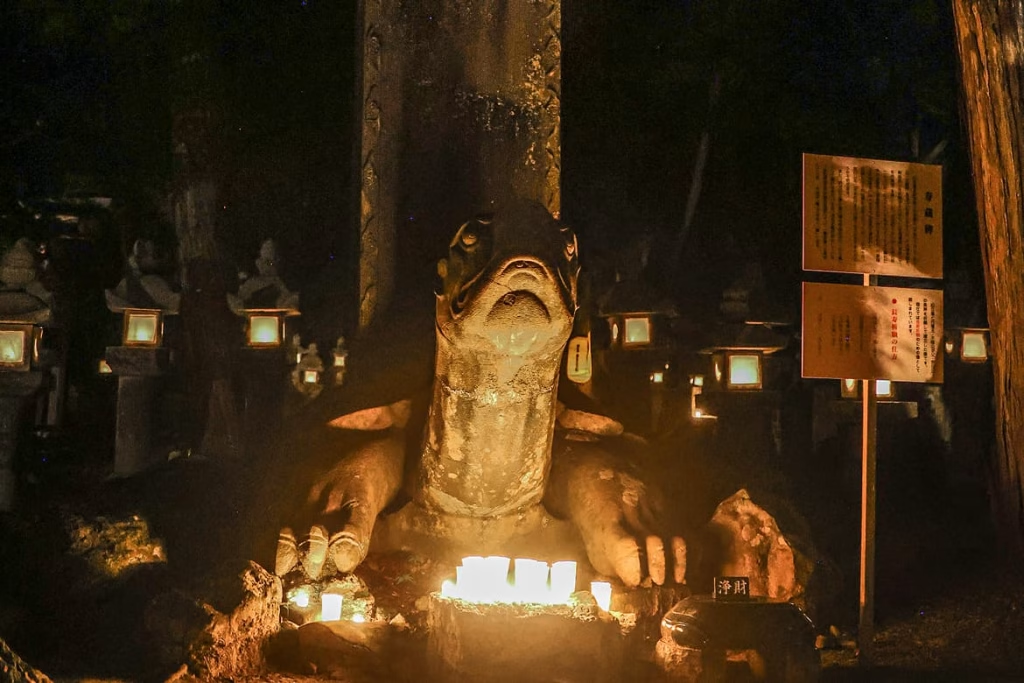
The Jūzōhi (Longevity Monument)
was erected
by Matsudaira Harusato (Fumai), the seventh head of the Matsudaira family,
to commemorate the virtues of his father, Muneaki, and
The large turtle statue placed as its base
become a beloved symbol of longevity.
people began to visit the site to pray for their own health and longevity,
and that
even today, many worshippers visit the temple grounds
and offer their prayers.
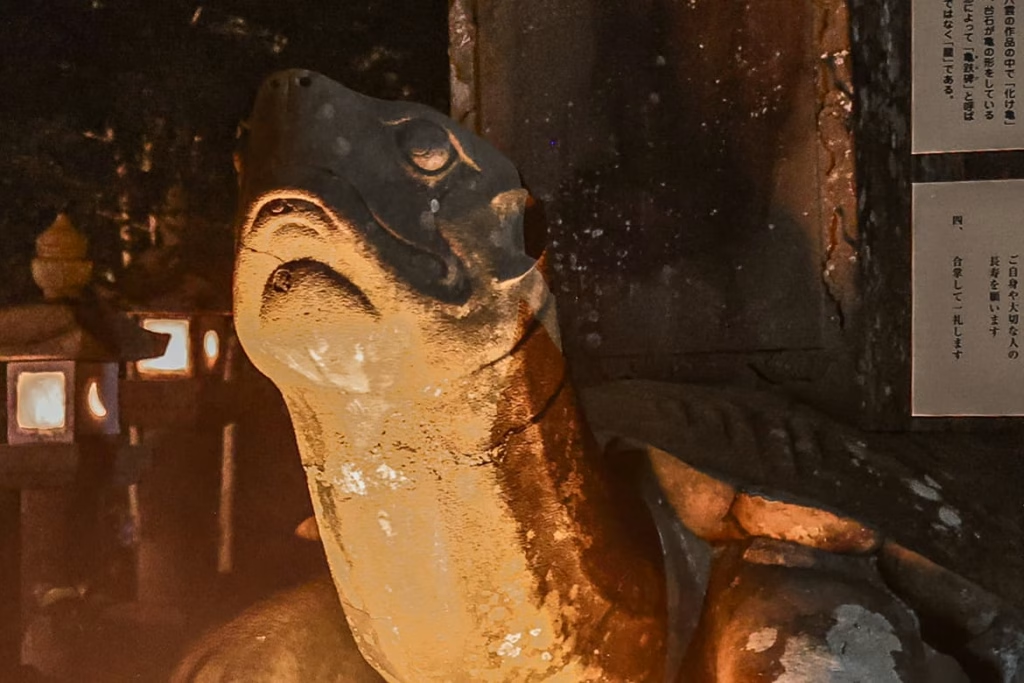
When visiting the temple, it is customary to clasp your hands together, bow, and
gently stroke the head of the large turtle statue
to pray for longevity.
The large turtle statue is not only a symbol of prayers for long life, but also
a watchful presence that looks after the future of those who visit.
Tradition and the story of Lafcadio Hearn
The large turtle statue standing at Gesshoji Temple
, a historical site of the Matsudaira family, the lords of the Matsue domain
is a symbol of prayers for longevity, but
it also has an aspect as a mysterious ghost story.
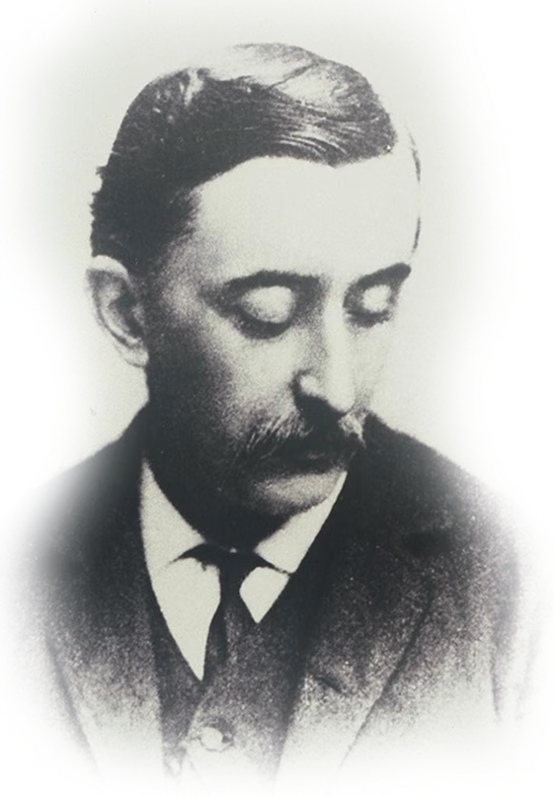
Lafcadio Hearn, a literary giant of the Meiji era
introduced this being known as the "ghost turtle"
in his book "Glimpses of Unfamiliar Japan,"
brought the strange legend of Gesshoji Temple to widespread attention.
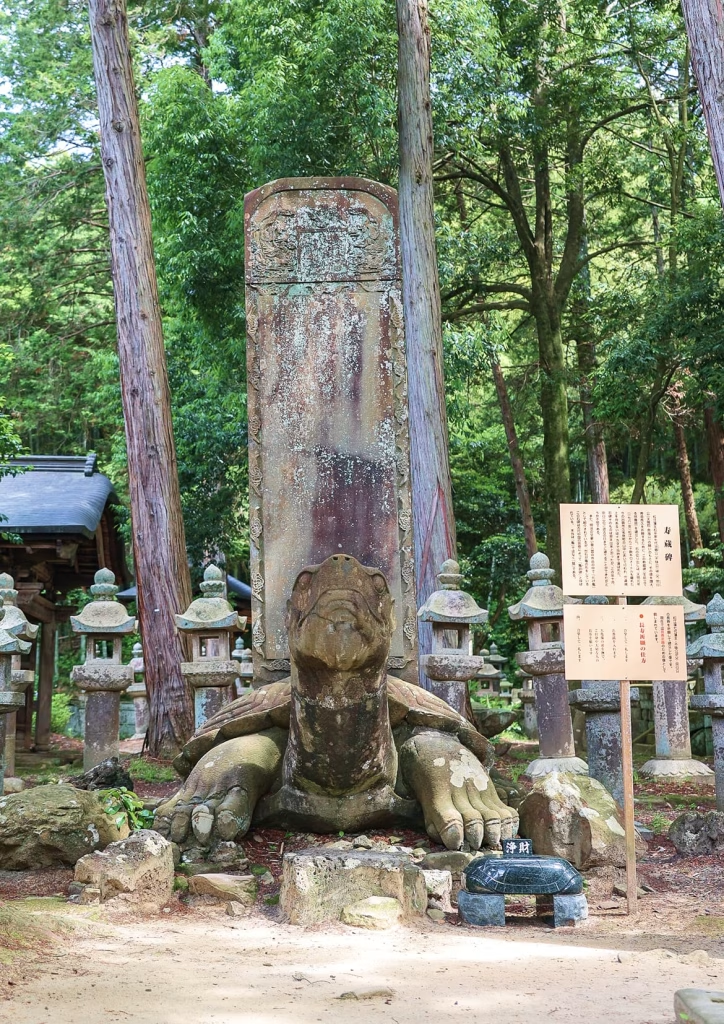
According to the legend of the "monster turtle" that appears in Lafcadio Hearn's writings, this giant turtle statue was said to be a terrifying presence that would come to life every night and bring disaster to people. The villagers were too afraid to touch it, and finally the head priest of the temple preached Buddhist teachings to the turtle and urged it to repent.
The turtle replied that there was nothing it could do on its own, and in the end, it is said to have placed a large stone monument on its back and sealed itself so that it could never move again. That is the image of the giant turtle statue carrying the Jūzō monument that still remains on the temple grounds today, a being where legend and reality intertwine.
By introducing this strange tale, Hearn portrayed the giant turtle statue not merely as a stone object, but as "a symbol of protection that safeguards people by remaining motionless." Thus, through being fictionalized in literature, the giant turtle statue became one of Matsue's representative legends and is still told today.
This narrative, conveyed through literary language, is one of the reasons why the stone statue remains in people's hearts not merely as a memorial, but as a legend worth passing down.
And in 2025, with Lafcadio Hearn's wife, Setsu, being chosen as the protagonist of an NHK morning drama, the Great Turtle Statue has received renewed attention.

Supporters of the Giant Turtle Statue Restoration Crowdfunding Project
The crowdfunding campaign for the restoration of the giant turtle statue, which ran from March 17th to June 15th, 2026,
was a great success, far exceeding our initial goal thanks to your generous support.
We express our sincere gratitude to everyone who contributed.
Supporters
(Only those who have given permission for their names to be published are listed; in no particular order, titles omitted.)
- Ryosuke Sejima
- Kanae Hino
- Tomoko Hamano
- Morisawa Shuhei
- Tetsuya Yoshizawa
- Thank you
- Rico705
- Mayumi Sugimoto
- Tomoyuki Kawashima
- soko
- Chaka
- Seiji Yamazaki
- Shinjo Village Nenbutsuji
Temple Kanichi Tanaka - K&H
- Junichi Iijima
- Shoichiro Munemasa
- Sumie Kasahara
- Masami Tsuda
- Takashi Ogoshi
- Asami Kida
- Hikozaburo Ikenuki
- Yoshinori Taoka
- Macle
- Mitsunobu Ota
- TSK Group Foundation
San-in Mirai Enjin - Kei-chan
- Sato Tomoko
- Takashi Nakamura
- Yoshiko Shiraishi
- Osamu Tanabe
- Emi Nakayama
- Sato Kyu
- Kenji Otaka
- yochiro
- Yuichiro Koshiji
- Atsushi Haruyama, Certified
Administrative Scrivener - Nuiko Ichiki
- Noriko Ichiki
- Takashi Ohata
- Shiho Ohata
- Ohhata Otoko
- Wakasa Eriko
- Junichi Mashita
- Yukie Oka
- Kengo Okada
- Umiiro no Chizu
Ltd. - Satoshi Mishima
- Kanzaki Makoto
- Yusuke Oi
- Yuichiro Sakamoto
- Takako Nakayama
- Yoshifumi Hayakawa
- Masami Fujiwara
- Miki Tokuoka
- Emi Hasegawa
- Masayuki Kaji
- Kenta Watanabe
- Noriko Morizono
- Katsuyoshi Hashimoto
- Masatoshi Taguchi
- Four light blooms
- Ma-kun
- Masako Kasahara
- Masashige Hirayama and Kimiko Hirayama
- Kazunori Takami
- Mutsuko Shoji
- Turtle family
- koko
- Hideko Horio
- Kasazaki Yasushi
- Yano
, Shimane Beer Co., Ltd. - Takako Date
- Tomohisa Hino
- Makoto Sumiyama
- Kosuke Igawa
- Yusuke Yamamoto
- Akiko Inada
- Hiroki Inamitsu
- Takayuki Tomita
- Akira and Madonna
- Kashi-san
- Kameko
- Chitose Kiuchi
- Akiko Morioka
- Yuko Matsuoka
- Mountain mozuku
- Hideko Hanada
- Torumama
- Yoko Ota
- Naoaki Nomura
- Kazuo Yamamoto
- Satoshi Tao
- Shoichi Nojo
- Hiroshi Kawai
- Chisato Nakata
- Matsushima Oku
- Okazaki Gathering
- Miwa Murakami
- Masami Kanda
- Hiroshi Oguchi
- Hideo Mori
- Eisuke Takagi
- Rika Kumada
- Mamemaru
- Hiroshi and Naoko Niihata
- Akemi Kawamura
- Hitomi Suzuki
- Shinobu Hibino
- Miura 🏯 A history lover's daily life
- Furyudo
Co., Ltd. - Miki Suzuki
- Kohei Yamada
- Mizuki Akira
- Mitsuhiro Kuranaka
- Hiroki Kuwahata
- Junko Naruse
- Masashi Morioka
- Makoto Wakahara
- Tokyo Akasaka
Rotary Club - Keiko Matsubara
- Shinya Tsuchida
- Kohei Kawada
- Akio Komatsu
- Hamana Miyako
(Shibui Miyako) - Tadashi Horio
- Ikuko Obe
- Yasuyuki Hayashi & Momoko
- San'in Doujinshi Sales Event:
Kachofugetsu - Tamiko Furuya
- Takashi Narisada
- Takahiko Kobayashi
- Takashi Hayashi
- Toshi, Manami, and Yuina Horino
- Tairatooru
- Masayasu Adachi
- Takahiro Akune
- Ikeda Koshin
- Yoshihiro Nakagawa
- Shigeru Sakamoto
- Hisashi Ogawa
- Masatoshi Yamamoto
- Yoshiji and Michiko Shimizu
- Koichi Egashira
- alley
- Arai Sae
- Teruhiro Ohashi
- Iwami Maestro
- Koji Nagahara
- Akio Mori
- Akihito Mochizuki
- Tomonori Miyamoto
- Okayama native
- Sato-chan
- Masayuki Ito
- Nem
- Akane Seki
- Jun Uotani
- Shota Yamanaka
- Katsuo Yoshimura
- Shukeiji Temple
- Tomoko Shoji
- Mandarin Orange Alien
- UK
- Takuya Nemoto
- Yuji Takeshita
- Hiroshi Kitaguchi
- Kanako Ito
- Kōyūji Temple
- Shino Moriyama
- Rie Ishihara
- Hiroyuki Takada/Minako
- Namimaru
- Naoya Shimoda
- Takeshi Fujimoto
- Nozomi Ariura
- Junichi Adachi
- Minoru Tanaka
- Kumiko Uchida
- Ayaka Shimonomon
- Wakou Co., Ltd
- Masahiro Nakatsuno
- Junichi Iijima
- Jun Nishiyama and Marie
- Kohei Kato
- Matsuhisa Shuhei
- Akiko Matsuhisa
- Kimie Yamazaki
- Yu Ninomiya
- Noritake Sugijo
- Kazuyuki and Kaoru Saito
- Yasuko Isobe
- Toshihiro Hattori
- Nana Kimura
- Shoji Uemura
- Hideyuki Nakadai
- Kimie Yamazaki
- Kai Kamijo
- Udo Fuika
- Yuri Asano
- Tomoko Yamaguchi
- Akihiko Kawamura
- Mikage Chida
- Takahiro Saito
- Satoyama Hassaku
- Miwa Kobayashi
- Yoko Ohno
- old horn
- Katsue Tsumagari
- Juri Nakatsuno
- Kenji Ando
- Tokio and Shinobu Karai
- Osaka Yoshiharu
- Kou-chan
- Maki Matsuura
- Hiroshi Ikeda
- Anna Komori
- Maki Shunosuke
- Fusako Arai
- Shuichi Hasegawa
- Buram
- Hideo and Akemi Miura
- Direct to Yonago
- Kamejiro Honma
- Kogusa Architectural Design Office
Co., Ltd. - Naonobu Horio
- Takashi Sugaki
- Chiyoko Shibuya
- Kimie Enomoto
- Shimane
Ltd. - Ekasumi Kion
- Hitoshi Akira
- Kaori Shinmei
- Kayoko Hashimoto
- Arneb Harada
- Atelier Furaibo
- Koizumi Bon
- Kiyoshi Oka and Shino Oka
- Masayo Kaneko
- Masafumi Kitakami
- Nami
- Hisao Sawada
- Minoru Ishimura
- Nobuyasu Nakahira, Mihara
City - Yoshio Hara
- Onishi Hoi Butsuguten Co., Ltd
- YPA
- Plant Taro
*The information displayed is based on the information you provided when making your donation.
(Those who entered "None" in the "Name to be displayed on the website" field, or those who left that field blank, are not listed.)

We sincerely thank you for your support.
please feel free to contact us via
the messaging function on the crowdfunding site,
We look forward to your continued support of Gesshoji Temple.
We sincerely thank you for your support.
If you have any problems, please feel free to contact us via the messaging function on the crowdfunding site, email, or phone.
We look forward to your continued support of Gesshoji Temple.